
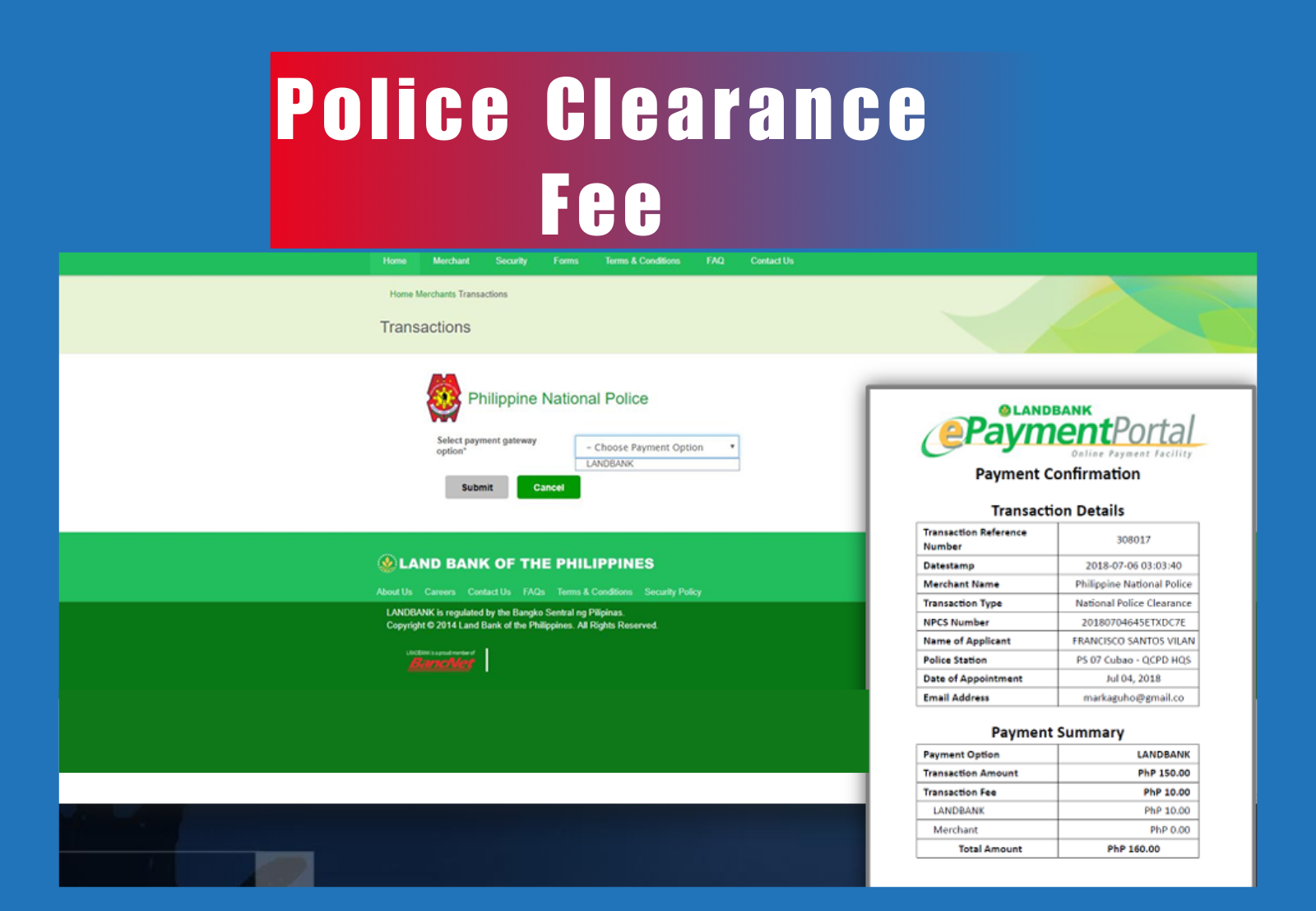
Many applicants in the Philippines walk into a police station expecting to pay the standard police clearance fee of ₱150, but end up spending more. Depending on where you apply, how you pay, and whether you choose express processing, the total cost can increase due to added local or service charges.
This 2026 guide explains everything you need to know about the police clearance fee in the Philippines. You’ll learn the official and actual costs, city-by-city fee differences, online payment methods, and how first-time job seekers can get their clearance for free. Understanding these details helps you plan your budget, avoid unnecessary expenses, and choose the most convenient way to obtain your police clearance without delay.
Official Police Clearance Fee in the Philippines
The official police clearance fee set by the Philippine National Police (PNP) through the National Police Clearance System (NPCS) remains at ₱150 for 2026. This amount covers the cost of application processing, biometric capture, and issuance of the official clearance certificate.
For applicants paying online, a small service or transaction fee of ₱10-₱30 may apply, depending on the chosen payment method, such as GCash, Maya, or Landbank. This brings the total to around ₱160–₱180 for most users applying through the national police clearance fee portal.
These charges ensure that all applications are processed digitally and securely through the NPCS system, making the process faster, safer, and more accessible nationwide.
Real Costs Applicants Pay in 2026
While the official fee remains ₱150, the actual police clearance cost that most applicants pay in 2026 ranges from ₱160 to ₱250, depending on several factors. The total amount can increase due to local government fees, service charges from payment channels, or optional ID printing.
Here’s a quick breakdown of typical costs:
- Metro Manila: ₱200–₱250 (includes local charges and ID card printing)
- Provincial Areas: ₱100–₱180 (may vary by city or municipality)
Factors that affect the total police clearance cost:
- Location: City offices often have higher administrative fees than provincial ones.
- Payment Channel: Online platforms like GCash, Maya, and Landbank add ₱10–₱30 for transaction processing.
- Optional ID Printing: Some stations charge extra if you request a physical ID card with your clearance.
National vs Local Police Clearance Fee
To understand the difference between national and local clearance, here’s a quick comparison of their fees, payment methods, and uses:
National Police Clearance Fee
Fee Range (₱): ₱150 base + ₱10 service charge
Where to Apply: National Police Clearance System (NPCS) online
Includes: Usually paid at the city treasurer or cashier
Payment Methods: Landbank, GCash, Maya
Main Use: Valid nationwide for jobs, visa, and legal purposes
Local Police Clearance Fee
Fee Range (₱): ₱150–₱300+ (varies by city)
Where to Apply: City or Municipal Police Station
Includes: Barangay clearance, cedula, and local admin fees
Payment Methods: Usually paid at the city treasurer or cashier
Main Use: For local employment, permits, or municipal use
Key Difference
- National Clearance: Digital and centralized record from the PNP database, used nationwide and accepted for most official purposes.
- Local Clearance: Issued by LGUs (city or municipality) and valid only within the same locality for small-scale or local requirements.
Police Clearance Fee by City (2026 Updated Table)
The police clearance price varies depending on the city or municipality where you apply. Some local government units add their own administrative charges, such as barangay clearance, cedula, or ID printing fees. Below is the updated 2026 cost comparison by area:
| City / Area | Base Fee | Additional Costs | Total Range |
|---|---|---|---|
| Makati | ₱150 | Treasurer ₱500, Cedula ₱50, ID ₱250 | ₱750–₱800 |
| Pasig | ₱150 | Transaction ₱20, Barangay ₱100 | ₱270 |
| Manila | ₱150 | Barangay ₱100 | ₱250 |
| Quezon City | ₱150 | Transaction ₱30 | ₱180 |
| Provincial Areas | ₱100–₱150 | Varies | ₱150–₱250 |
These rates show how local offices set their own charges on top of the standard ₱150 fee, so applicants should always confirm the total cost with their city or municipal police station before visiting.
How to Pay Police Clearance Fee Online (Step-by-Step)
You can easily complete your police clearance payment online through the National Police Clearance System (NPCS). Follow these steps to pay securely and confirm your police clearance fee:
Step 1: Go to https://pnpclearance.ph.
Access the official NPCS portal to start your online application or payment process.
Step 2: Schedule an appointment and generate your reference number.
Choose your preferred police station and appointment date. A reference number will appear for payment tracking.
Step 3: Choose your preferred payment method.
You can select from several official payment channels:
- Landbank (Link.Biz Portal)
- GCash
- Maya
- Credit or Debit Card (Visa/MasterCard)
- Bayad Center or 7-Eleven CliQQ
Step 4: Complete your payment and save the transaction receipt.
Take a screenshot or print your proof of payment for confirmation and station verification.
Step 5: Check your email or NPCS dashboard for payment confirmation.
Once the payment is posted, your dashboard status will change from Pending to Paid, allowing you to proceed with your appointment.
Police Clearance Payment Options
You can pay for your police clearance through several secure, convenient channels nationwide.
1. Landbank (Link.Biz Portal)
Ideal for government employees and users with a Landbank account. Offers direct payment with minimal transaction fees.
2. GCash
The most popular and fastest payment option. Payments post instantly, and receipts are automatically sent via email or app.
3. Maya (formerly PayMaya)
Accepts e-wallet and card payments with instant confirmation and high security.
4. Credit or Debit Card
Best for OFWs or users abroad without local wallets. Supports Visa and MasterCard.
5. Over-the-Counter (7-Eleven, Bayad Center)
Perfect for applicants without online banking. Pay using your reference number and keep the printed receipt as proof.
6. Other Gateways (Dragonpay, Coins.ph)
Accept payments from multiple banks or e-wallets, with real-time email and SMS confirmation.
Free Police Clearance for First-Time Job Seekers
Under Republic Act No. 11261, the First-Time Jobseekers Assistance Act, qualified Filipinos can obtain a police clearance free of charge. This program aims to help fresh graduates and first-time applicants reduce the costs associated with pre-employment requirements.
Eligibility:
- A Filipino citizen applying for a job for the first time
- Holding a Barangay Certificate confirming your first-time jobseeker status
Documents Required:
- Barangay Certification (signed and sealed by your barangay office)
- One Valid Government ID
This benefit covers the full ₱150 police clearance fee, but it can only be availed once. Applicants should present the certification at the police station or upload it when applying online through the NPCS portal.
Express and Same-Day Processing Fees
Some police stations offer Express lanes for applicants who need their clearance on the same day. These lanes are primarily available in major cities or high-traffic stations and can significantly shorten waiting times.
The average add-on cost for express or priority processing ranges from ₱50 to ₱200, depending on the station and demand. However, not all police stations offer same-day clearance, which often depends on daily applicant volume and system capacity.
It’s best to call ahead or check your selected station’s schedule before visiting to confirm whether express processing is available. This ensures you avoid unnecessary travel or waiting times, especially if you need your clearance urgently for employment or visa submission.
Hidden and Additional Costs to Expect
While the base police clearance cost is ₱150, applicants often pay extra for required documents and services. Here’s what to budget for:
Barangay Clearance Fee: ₱50–₱100
Usually required before applying at the police station.
Cedula (Community Tax Certificate): ₱50–₱70
Issued by your local city or municipal office.
ID Printing (Optional): ₱150–₱200
Some cities include a physical Police Clearance ID card for convenience.
Miscellaneous Fees: ₱10–₱30
Covers photocopying, transportation, or online convenience fees.
These small add-ons can increase the total police clearance cost, especially for walk-in applicants.
Refunds, Reissuance, and Renewal Fees
Refund, reissuance, and renewal fees are essential to understand if your payment didn’t go through, your certificate was lost, or your clearance needs renewal.
Refund Policy:
Once paid, the fee is non-refundable. However, if your appointment was missed or canceled, you can reschedule it through your NPCS dashboard using the same reference number.
Reissuance Fee (Lost Certificate):
If your clearance is lost or damaged, you’ll need to reapply and pay ₱150 for reissuance. Bring a valid ID and your old reference number (if available) to speed up the process.
Renewal Fee:
Renewing an expired clearance costs the same as a new application, ₱150 plus applicable service charges.
To avoid extra payments, always keep a digital backup of your clearance and verification records for future use.
Tips to Save Money on Police Clearance Application
Below are the tips to save money:
Apply Online:
Use the official NPCS portal to skip the extra treasurer and local processing fees.
Prepare Exact Cash and Documents:
Bring all requirements, such as barangay clearance, cedula, and a valid ID, to avoid repeat visits and added expenses.
Choose Low-Fee Payment Channels:
GCash and Landbank Link.Biz usually have the lowest transaction charges (₱10–₱15).
Avail Free Clearance (If Eligible):
Under the First-Time Jobseekers Assistance Act, you can get your police clearance for free by presenting a barangay certificate.
Conclusion
The police clearance fee in the Philippines is ₱150, but the total cost can increase depending on your payment method, city, or additional local fees. Applying online through the National Police Clearance System (NPCS) is the most transparent and convenient way to complete your application. It allows you to choose secure payment options, avoid hidden charges, and easily track your clearance.
FAQs
1. How to pay police clearance via Landbank?
Go to https://pnpclearance.ph, log in, and schedule your appointment. On the payment page, select Landbank (Link.Biz Portal), then complete the payment using your Landbank iAccess or weAccess account. You’ll receive an email confirmation once payment is successful.
2. How to pay police clearance using GCash?
Select GCash on the NPCS payment page, scan the QR code or use the gateway link, and complete your payment through the GCash app. Your payment will reflect instantly in your NPCS dashboard.
3. How to select the payment option in the police clearance?
After generating your reference number, you’ll see multiple payment methods, including Landbank, GCash, Maya, Credit/Debit Card, or 7-Eleven. Click on your preferred option, follow the instructions, and save the confirmation receipt.
4. How to change payment method in police clearance?
Once you’ve selected a payment method, it cannot be changed for that transaction. You’ll need to create a new appointment and generate a new reference number to use a different payment channel.
5. How much is the police clearance fee?
The official police clearance fee is ₱150, but with transaction or service charges, the total cost typically ranges from ₱160 to ₱200, depending on your payment method.