
For visa applications in the Philippines, embassies use police clearances to confirm that an applicant has no criminal record, and in most cases, a national police clearance is required rather than a local one. Police clearance is commonly requested for work, study, and long-term visa applications, but acceptance always depends on the specific rules of the embassy or consulate. Some embassies clearly state the type of clearance they accept, while others leave it to the applicant to submit the correct document.
This guide explains which police clearance is appropriate for visa applications and outlines the correct steps to apply. It helps you avoid delays, rejections, or the need to reapply due to submitting the wrong clearance.
What Is Police Clearance for Visa Applications?
Police clearance for visa applications is an official document issued by the police that confirms whether an applicant has a criminal record. Visa authorities use this document as part of their background verification process before approving entry into another country.
The clearance helps embassies assess security, legal compliance, and eligibility. For this reason, visa offices usually prefer police clearance that is checked at a national level, as it provides broader record coverage than local checks.
Why Police Clearance Is Required for Visa Applications
Visa authorities require police clearance for the following reasons:
- Background verification to confirm whether the applicant has any criminal record
- Security screening to assess potential risks to the host country
- Legal compliance checks as part of immigration requirements
- Character and eligibility assessment for visa approval decisions
These checks help embassies ensure that visa applicants meet their entry and stay conditions.
Who Needs Police Clearance for a Visa
Police clearance is commonly required for the following visa applicants:
- Work visa applicants, as employers and embassies require background verification
- Student visa applicants, especially for long-term academic programs
- Long-term or permanent residency applicants, where an extended stay is involved
Police clearance requirements depend on the embassy or consulate handling the application. Always check the specific visa guidelines before applying.
Requirements for Police Clearance for Visa Use
For visa applications, police clearance requires proper identity verification and complete personal information. The documents listed below are commonly accepted, but requirements may still vary by location.
- Valid government-issued ID, such as a Philippine passport, UMID, driver’s license, PhilSys National ID, PRC ID, or Postal ID
- Completed application details, including full name, date of birth, address, and purpose of clearance
- Personal appearance for verification, which may include photo capture and fingerprint scanning
Requirements may vary by police station or clearance center, so always confirm which documents are accepted before applying.
Step-by-Step Process to Obtain Police Clearance for Visa Applications
This process explains how police clearance is commonly obtained in the Philippines when applying for a visa. The steps may vary slightly by location, but the general process remains the same.
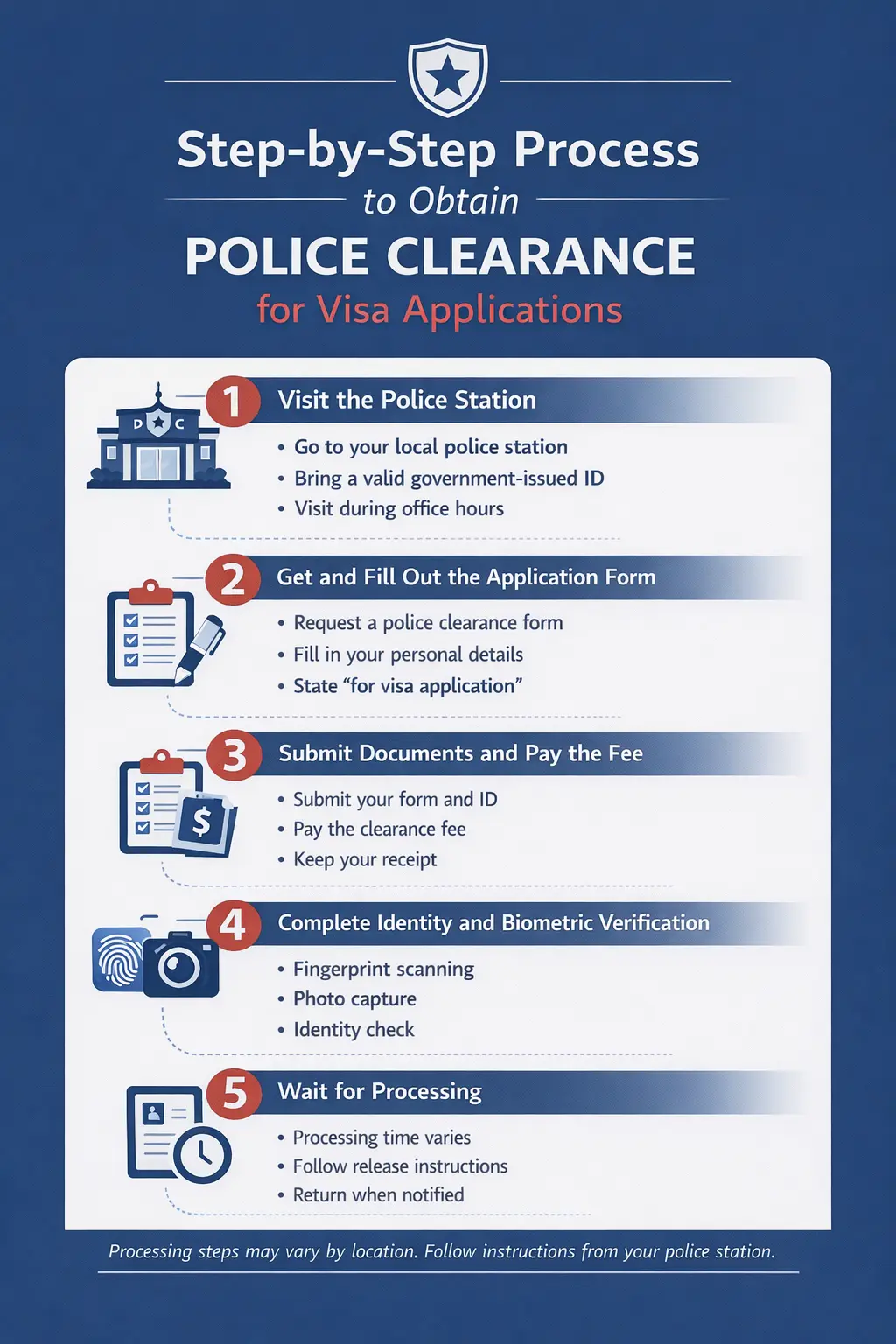
Step 1: Visit the Local Police Station or Clearance Center
Go to the nearest police station or designated police clearance processing center in your city or municipality.
- Some areas have specific police clearance offices
- It is best to visit during office hours to avoid delays
- Bring at least one valid government-issued ID
Step 2: Get and Fill Out the Application Form
Request a police clearance application form from the police station.
You will be asked to provide:
- Full name
- Date and place of birth
- Current address
- Purpose of clearance, state for visa application
Make sure all details are correct and match your ID to avoid processing issues.
Step 3: Submit Requirements and Pay the Fee
Submit the completed application form along with your required documents.
- Present your valid government-issued ID
- Pay the required police clearance fee
- Keep the payment receipt for reference
Fees may vary by location, so confirm the exact amount at the station.
Step 4: Complete Identity and Biometric Verification
After submission, you will undergo identity verification.
This usually includes:
- Fingerprint scanning
- Photograph capture
Police personnel will assist you during this step to ensure proper record matching.
Step 5: Wait for Processing
Your application will then be processed by the police station.
- Processing time depends on the station’s workload
- You may be asked to return on a specific date
- Some stations release the clearance on the same day
Always follow the instructions given by the issuing police office.
Step 6: Collect Your Police Clearance
Return to the police station or clearance center to collect your police clearance.
- Bring your valid ID and payment receipt
- Check your name, date of birth, and other details
- Report any errors immediately for correction
Once verified, your police clearance is ready to be submitted with your visa application.
Fees and Validity for Visa Applications
National police clearance has a standard fee of ₱150, excluding any convenience fees charged by payment partners. This fee is set by the Philippine National Police and applies nationwide. For visa applications, the clearance is commonly required to be recent, often within six months of the date of issuance. Some embassies may require a shorter validity period. Always check the specific validity rules stated by the embassy or consulate handling your visa application to ensure your police clearance is accepted.
Common Issues and How to Avoid Delays
Applicants often face delays due to avoidable mistakes during the police clearance process. Being aware of these issues helps ensure a smooth visa submission.
Name or detail mismatches
Differences in spelling, name format, or personal details can cause verification issues. Ensure all information matches your identification exactly.
Applying for the wrong clearance type
Local police clearance may be rejected for visa use. Confirm if a national police clearance is required before applying.
Incomplete documents
Missing or incorrect documents can delay processing. Prepare all required IDs and details in advance.
Tips for Visa Applicants
Following these simple tips can help you avoid delays and last-minute problems during your visa application process.
- Apply early to allow enough time for processing and possible corrections
- Match clearance validity with your visa timeline, as embassies often require recent documents
- Keep copies of your police clearance in case you need to resubmit or reference it later
These steps help ensure your police clearance is ready when your visa application is reviewed.
Conclusion
Choosing the correct police clearance is important for a smooth visa application. Submitting the wrong clearance can lead to rejection or unnecessary delays. For most visa applications, national police clearance is the safer option because it provides wider record coverage and is commonly accepted by embassies. Always review the visa instructions carefully and confirm clearance requirements before applying. This helps ensure your application moves forward without issues.
FAQs
Which police clearance is required for visa applications?
Most visa applications require national police clearance because it checks records at a nationwide level. Always follow the visa instructions provided by the issuing authority.
Can a local police clearance be used for a visa?
Local police clearance is rarely accepted for visa purposes. Many embassies require a national police clearance, so submitting a local one may result in rejection.
How long is a police clearance valid for visa use?
Police clearance is usually required to be recent, typically within 6 months of issuance. Validity requirements can vary by visa type.
What if the embassy requires a specific clearance?
If the embassy specifies a clearance type, always follow that requirement. Submitting a different clearance may delay or affect your visa application.